How Do You Know What Ipod You Have
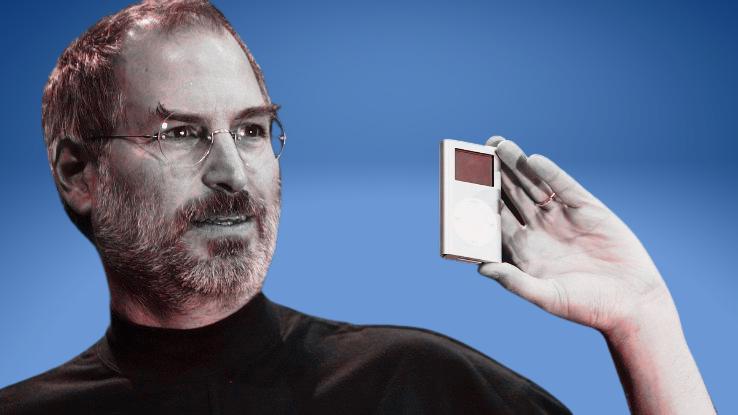
These days, you lot most likely rely on your smartphone, tablet or laptop for streaming music, but, if you the mood struck, y'all could still purchase an iPod Touch. This seventh generation iteration of Apple tree's one time-popular line of portable media players may non concur the same cultural relevance it once did, but the iPod's importance cannot be understated. Not only was information technology a landmark invention for Apple — a brand-builder that endeared a broad range of customers to Apple tree before the company launched its iPhone — but it also changed the music game.
Whether you lot call back toting around a boombox, Walkman or CD player, we tin can all agree that mp3 players fabricated listening to music on the go much more convenient. Not only that, but these portable devices immune yous to access a wide-ranging library of music all in in one case identify. And, two decades ago, no 1 was doing it ameliorate than Apple. Released on October 23, 2001, the iPod was a revolutionary device. So, to celebrate the iPod'due south 20th anniversary, we're taking a look dorsum at how Apple's media actor made a lasting impact on fine art, technology and popular culture at big.
2001–2002 | The Outset iPod Hits Shelves
While portable mp3 players starting time came onto the scene in the mid-1990s, they didn't pose likewise much of a threat to CD players. The problem? Although loading songs onto a pocketable device sounds convenient, this early mp3 players were either too small or too big — useless, because they couldn't hold a ton of songs, or clunky, because they contained heavy hard drives. Not to mention, none of those early mp3 players were all that user-friendly.
In the late '90s, Tony Fadell, who in one case worked with the likes of Full general Magic and Philips, was eager to not just make a better mp3 histrion, but launch a digital music store alongside the product. Big-proper name companies in the music-tech infinite, like Sony and Philips, turned Fadell downwardly. Merely Apple, which wasn't really a player in this space still, was simply starting what would become its iPod projection, and hired Fadell on to help develop the music player'due south software. After less than a year of evolution, Apple shared its new device with the globe.
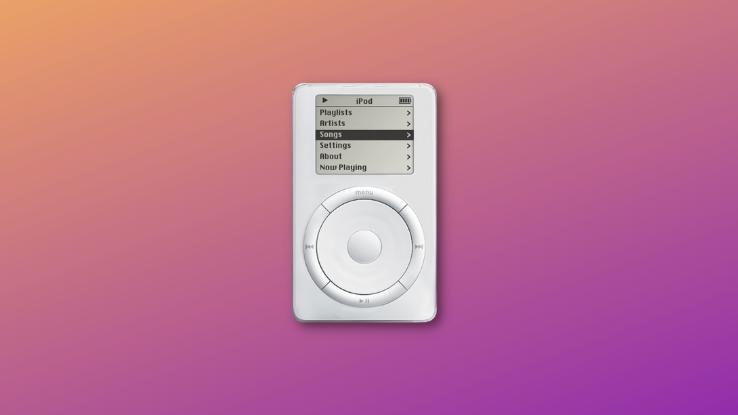
At launch, the iPod had a then-massive 5GB of storage space and an impressive ten-60 minutes (rechargeable!) battery life. That first iteration featured a black-and-white display screen — one that was much more than dynamic than those of competitor devices — and, notably, users navigated the device using the signature coil wheel (later, the click wheel). The main drawback? The little device that could put "one,000 songs in your pocket" was only compatible with Mac products at kickoff.
Past 2002, Windows users were able to use the iPod with their existing not-Mac setups. Without a doubt, this smart positioning put Apple on track for unparalleled success, but the iPod'south sleek, unique design also factored into the product'south eventual success. Designers were inspired by the look of '50s-era transistor radios and that wheel-based interface were inspired by the push layout of contemporary cordless phones.
Much in the same mode the brand names Kleenex and Band-Aid became the colloquial terms for tissues and bandages, the iPod became the become-to term for referring to mp3 players. According to Apple tree, copywriter Vinnie Chieco proposed the proper name, maxim that the iPod image reminded him of the EVA Pods in Stanley Kubrick's 2001: A Space Odyssey (1968).
Ii years after the initial release, the iPod got its first full redesign, which transformed the iconic device into the model you probably call back of when yous hear the word "iPod." The first generation iPod's mechanical scroll cycle had been replaced with a impact-sensitive bicycle when the Windows-compatible version hitting shelves, only this complete overhaul led to an all-touch on interface and a slimmer blueprint.
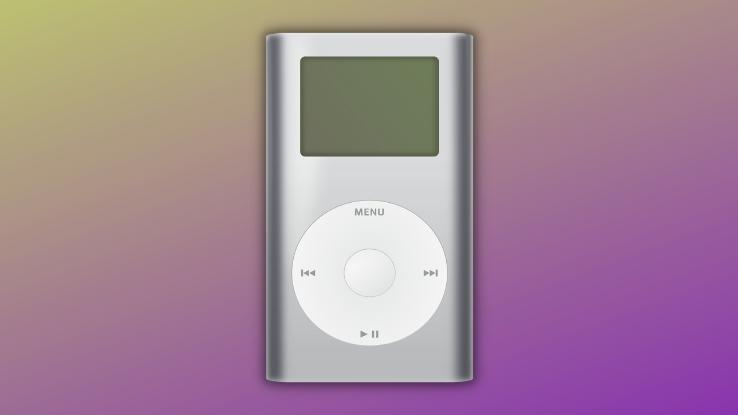
A twelvemonth later on, in 2004, the iPod Mini hitting the market. And information technology was this device that actually changed the game. This smaller, more affordable model might've had less gigs than the classic iPod, only it made up for that smaller storage capacity by coming in five unlike colors and introducing the signature "click wheel," which was used in all subsequent iPod generations until the iPod Touch debuted. Only 2004 was also an exciting year for the classic iPod line; the device (known as the iPod Photo) featured a color display and offered a whopping 40GB of storage infinite. At the fourth dimension, it was such a novelty to view full-color photos on a portable device — if you can imagine that.
With a variety of models for consumers to cull from, Apple began really hitting its stride with the iPod. According to Apple Insider, the iPod dominated digital music player sales in the U.S., making upward over 70% of the market for all types of players. As PC World put information technology, the iPod "altered the landscape for portable sound players."
Apple's advertising strategy didn't hurt either. Starting time developed in 2003, the now-iconic dancing silhouette ads were instrumental in redefining Apple's brand. Of class, the standout song choices helped as well. Any i of the tunes used in an iPod commercial — "Hey Mama" by the Blackness Eyed Peas, "Jerk It Out" by Caesars, "Technologic" by Daft Punk, "1234" by Feist, "Close Up and Allow Me Get" by The Ting Tings, "Bruises" by Chairlift — certainly has the power to ship y'all back to the mid-2000s.
And while we're still upset that Apple forced that U2 album on us in 2014 without our consent, at that place's no denying that the company's earlier collaboration with the Irish rock band in 2004 was a large moment for Apple and its view on endorsements. In addition to the release of a limited-edition iPod, Apple tree celebrated the release of U2'south How to Dismantle an Atomic Bomb album by debuting an iPod-exclusive music video of U2's hit song "Vertigo."
iPod Mini | Usuario Business firm/Wikimedia Commons, CC By-SA 3.0
2005–2006 | The iPod: Now in Color — and More Affordable
While the iPod Mini opened the door for a great number of consumers, Apple saw the importance of introducing an even more affordable iPod model. In 2005, the company launched the iPod Shuffle, which retailed for only $99; of form, the Shuffle didn't have a display screen and it could merely agree a gig of songs, but the affordability of it got folks hooked on Apple's products.
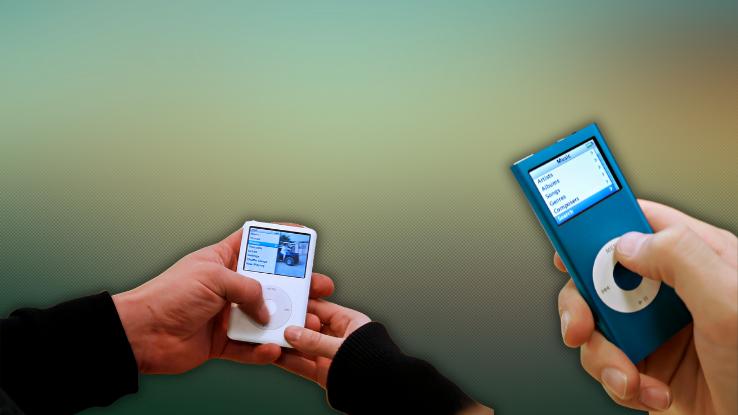
That same year, Apple introduced the iPod Nano, a screen-based iPod that used wink retentiveness. Its storage space went up to 4GB, merely this more meaty device was all the same more affordable than archetype iPod models. If the shuffle was too low-tech — or if you lot wanted a more than user-friendly interface — the Nano was a groovy in between model. But if you lot wanted to go big, Apple's iPod Video, which provided a staggering 60GB of storage and allowed for video playback, was besides available for a steeper cost-point. The device'due south focus on video content meant a larger screen — and in that location'southward no uncertainty that this focus helped usher in the historic period of portable, multimedia devices.
2007–2009 | Who Needs Buttons? The iPod Touch Dominates
In 2007, Apple introduced the iPod Touch, which looked a whole lot like its iPhone. With a large touchscreen, 32GB of storage infinite, and the iOS operating system on hand, the iPod Affect straddled the line between portable media actor and smartphone. While information technology was primarily used to play music, games and video content, the landmark device also allowed for WiFi-based internet browsing and email access. Non to mention, users could also admission the iTunes Store via the device'south app.
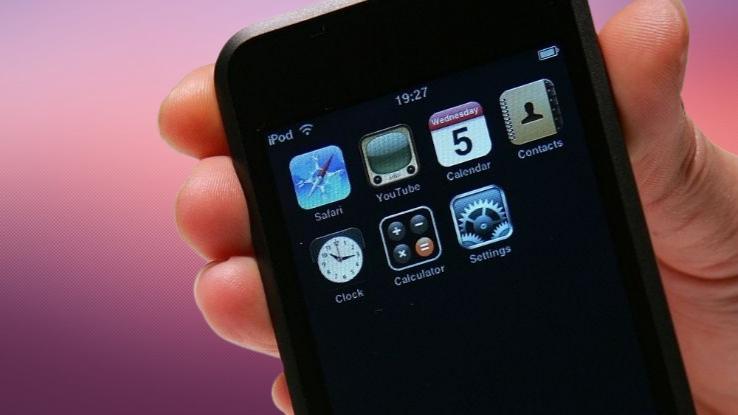
For users who wanted to go on the focus on music, 2007's iPod Classic featured a whopping 160GB of storage infinite and a more "low-tech" experience. During this time, Apple sold its ane-hundred millionth iPod, which, unsurprisingly, confirmed that the iPod was the best-selling digital music player of all time. This boom likewise helped Apple build brand loyalty with a broader audition; these same iPod users would peradventure be more inclined to purchase iMacs, MacBooks and iPhones.
Two yers subsequently, a push-less, vox-controlled version of the iPod Shuffle came out as did an iPod Nano outfitted with a video camera. With a variety of iPod options to suit costumer's varying needs, Apple had created a product dearest beyond generations — a kind of cultural touchstone that defined the decade. "If there's anything anyone in this field is chasing, it's Apple's quality and simplicity," Fast Visitor noted dorsum in 2005. "Option up an iPod, and you lot get it, you feel it, you sense it."
2010–Present | The iPod Lives
By 2010, the iPod Nano resembled the Shuffle in size, though it did feature a impact screen, video playback capabilities and the signature click wheel. The camera, even so, was removed in favor of a new innovation; these iPods could be outfitted with bands and worn on your wrist, much like a watch. Meanwhile, the iPod Touch became much more like the iPhone 4; with information technology, you could text your friends via iMessage or hop on a FaceTime telephone call.
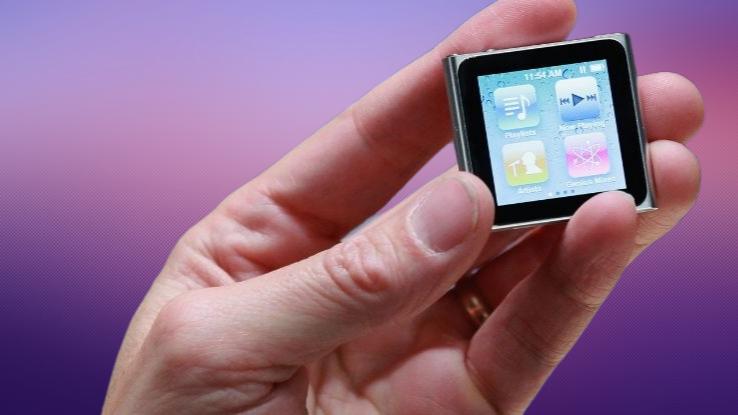
From music player to multifunctional communication and entertainment device, the iPod evolved with its audition'southward needs. Since 2017, Apple has stopped manufacturing standalone music players, like the Nano and Shuffle, though you tin can notwithstanding pick upwardly an iPod Touch if yous don't desire to load music and content onto your smartphone — or if you lot don't take a smartphone.
While the iPhone might have become Apple's marquee product, it's articulate that this ubiquitous device wouldn't accept the impact and reach it currently has had the iPod not paved the way first. Outside of the tech realm, the iPod helped usher in the digital music age — an age of streaming, of buying 99-cent singles instead of whole albums — thank you in large part to iTunes, a platform that succeeded in conjunction with the iPod.
Back in 2004, around the fourth dimension of the "Vertigo" collaboration, U2 frontman Bono said that the iPod is "the most interesting art object since the electric guitar in terms of music." Now that'south high praise. And, because the iPod'due south legacy twenty years later, the pocket-sized device definitely lived upward to that massive commendation.
Source: https://www.ask.com/entertainment/ipod-evolution-history?utm_content=params%3Ao%3D740004%26ad%3DdirN%26qo%3DserpIndex
0 Response to "How Do You Know What Ipod You Have"
Post a Comment