A Family Could Have a Positive Savings Ratio at the Same Time Its Debt Service Ratio Is Increasing
Insights on Canadian Society
Debt and assets among senior Canadian families
past Sharanjit Uppal

Release date: April iii, 2019
Starting time of text box
Using data from the Survey of Fiscal Security (SFS), this article looks at changes in debt, assets and net worth among senior Canadian families over the period from 1999 to 2016. It besides examines changes in the debt-to-income ratio and the debt-to-asset ratio of senior families with debt.
- In 2016, the proportion of senior families with debt was 42%, up from 27% in 1999. The proportion with mortgage debt about doubled from 8% to 14%, and the share of those with consumer debt increased from 24% to 37%.
- Amidst senior families with debt, the median corporeality of debt was $25,000 in 2016, up from $nine,000 in 1999 (expressed in 2016 constant dollars). The median level of avails held by these families also rose, from $327,000 to $607,400 (in 2016 constant dollars).
- Around two-thirds of the total increase in the debt of seniors was attributable to an increase in mortgage debt. With regard to assets, existent manor assets contributed to more than 1-half of the overall increase in the value of seniors' assets.
- The net worth of a family corresponds to the total amount of assets, minus the full amount of debt held by family members. In 2016, the median cyberspace worth of senior families with debt was $537,400, up from $298,900 in 1999.
- Between 1999 and 2016, the median debt-to-income ratio for senior families with debt more doubled from 0.24 to 0.52. Withal, the debt-to-asset ratio inverse little, from 0.05 in 1999 to 0.06 in 2016.
Stop of text box
Introduction
The proportion of the Canadian population aged 65 and over has been on the ascension over the past few decades, especially during the 2000s. In 1971, individuals aged 65 and over comprised 8% of the Canadian population. Note In 1999, this proportion was 12%, and by 2017 it was nearly 17%. It is projected to increment further, to 24%, past 2036. Note As a outcome of population aging, there is a growing body of inquiry related to Canadian seniors. Recent studies have looked at their labour market activity, Note income replacement rates, Note time use, Note and life satisfaction. Note This study adds to the trunk of inquiry by examining the economic well-being of seniors as measured by indebtedness.
Household indebtedness, for the population every bit a whole, has risen over fourth dimension. This is possibly due to factors such as easier access to credit, rise house prices and consumerism. The ratio of household debt to personal disposable income doubled from 86 in the outset quarter of 1990 to 176 in the terminal quarter of 2018. Notation This implies that, on average, households owed $ane.76 for every dollar of income at the end of 2018. Policymakers have been concerned past this loftier ratio, particularly in relation to rising firm prices and predictable increases in interest rates.
Given that household debt has been ascension over time, it is likely that a greater proportion of individuals are entering their retirement years carrying debt. Debt tin can be particularly problematic for seniors as repayment tin can be more than difficult on a reduced income. Existing Canadian studies related to household debt have mostly focused on the adult population every bit a whole. Note 1 study focusing on older individuals (retired and aged 55 and over) used 2009 data. Note Since then, the economy has been characterized by tape-low interest rates and rising house prices, 2 factors that can greatly affect a household'due south balance canvass.
Debt values, even so, must be understood in relation to assets. For instance, mortgage debt is backed by an nugget—the value of the business firm. If the value of avails is fairly large in relation to the debt a household carries, a high debt-to-income ratio is non necessarily synonymous with financial stress. Hence, the purpose of this article is to look at both debt and assets, and to provide a profile of the net worth held by Canadian seniors.
This paper focuses on all families with debt whose major income earner was 65 or over. Annotation Using data from the Survey of Fiscal Security (SFS), this study examines debt and nugget indicators over the menstruation from 1999 to 2016 across demographic characteristics such equally historic period, pedagogy, family unit structure, dwelling house ownership and family unit income (see the section Data sources, methods and definitions). In addition, it looks at two cardinal indicators of indebtedness: the debt-to-income ratio and the debt-to-asset ratio (for a give-and-take on income, encounter the section Sources of family unit income among senior families). All numbers in this article are expressed in 2016 dollars using the Consumer Price Index (All Items) every bit a deflator.
More than than 4 in 10 senior families had debt in 2016
In 2016, the proportion of senior families with debt was 42%, up from 27% in 1999 (Table 1). Note The share with mortgage debt most doubled, going from eight% to 14%, while that with consumer debt increased from 24% to 37%. These proportions and changes over time, notwithstanding, varied beyond family characteristics.
| 1999 | 2016 | |||||
|---|---|---|---|---|---|---|
| Any debt | Mortgage debt | Consumer debt | Any debt | Mortgage debt | Consumer debt | |
| percent | ||||||
| Senior families with debt | 27.4 | vii.vii | 24.3 | 42.0 Note* | xiii.nine Note* | 37.4 Note* |
| Sex of major income earner | ||||||
| Male person | 31.1 | 9.4 | 27.4 | 45.4 Note* | 15.9 Note* | 40.1 Note* |
| Female | 22.7 | five.5 | 20.3 | 37.8 Note* | xi.four Annotation* | 34.0 Note* |
| Age of major income earner | ||||||
| 65 to 69 | 41.5 | 13.v | 37.ix | 58.2 Note* | 22.7 Notation* | 51.5 Note* |
| 70 to 74 | 28.2 | eight.0 | 24.9 | 47.8 Note* | fifteen.two Note* | 42.three Note* |
| 75 to 79 | 22.2 | 4.8 NoteE: Use with caution | 18.9 | 38.2 Annotation* | 10.viii Note* | 35.3 Note* |
| 80 and over | 11.half-dozen | 2.1 NoteDue east: Use with caution | 9.vii | xx.i Annotation* | 4.5 | 17.vi Note* |
| Highest level of education of major income earner | ||||||
| Less than high school | 25.3 | 5.0 | 23.3 | 33.eight Note* | 10.0 Note* | xxx.1 Notation* |
| High school diploma | 27.5 | 11.six | 23.2 | 41.half-dozen Annotation* | thirteen.0 | 37.2 Annotation* |
| Non-university postsecondary certificate or diploma | 29.2 | 8.6 NoteE: Use with circumspection | 24.seven | 47.8 Annotation* | 15.1 Notation* | 43.5 Note* |
| Academy caste or document | 35.0 | 13.6 | thirty.0 | 48.0 Note* | 19.4 | 41.3 Note* |
| Family structure Table 1 Notationane | ||||||
| Unattached private | 20.0 | iii.ix NoteE: Use with caution | 17.half-dozen | 33.2 Note* | 9.ane Note* | 29.6 Notation* |
| Male | 21.1 | 4.eight NotationDue east: Utilise with caution | eighteen.7 | 35.four Note* | 9.2 | thirty.5 Note* |
| Female person | 19.v | 3.6 NotationDue east: Use with caution | 17.2 | 32.ane Note* | nine.1 Note* | 29.one Note* |
| Couple, no children | 30.5 | nine.4 | 26.5 | 46.iii Note* | 16.five Note* | xl.8 Note* |
| Other family types | 45.5 | 15.5 NoteEast: Employ with caution | 42.2 | 66.six Note* | 26.1 | lx.6 Note* |
| Immigrant status of major income earner | ||||||
| Immigrant | 25.3 | 10.4 | 21.4 | 37.half dozen Note* | xv.5 Note* | 32.viii Note* |
| Canadian-born | 28.0 | half-dozen.9 | 25.1 | 43.5 Note* | 13.3 | 38.9 Note* |
| Home ownership status Tabular array 1 Noteii | ||||||
| Owners with a mortgage | 100 | 100 | 57.five | 100 | 100 | 67.five |
| Owners without a mortgage | 21.six | 1.4 AnnotationE: Utilise with caution | 21.three | 35.vii Note* | 3.two Annotation* | 34.iv Note* |
| Non-owners | 23.5 | NoteF: too unreliable to exist published | 23.2 | 31.v Note* | 0.iv NoteE: Employ with caution | 31.4 Annotation* |
| Labour strength status of major income earner | ||||||
| Employee | 60.6 | 27.3 NoteE: Utilise with caution | 54.9 | 66.9 Note* | 30.nine | 61.viii |
| Self-employed | 37.1 | 21.7 NoteE: Use with caution | 29.four NoteEastward: Utilise with circumspection | 62.6 Note* | thirty.1 | 53.8 Note* |
| Not in the labour forcefulness | 26.1 | six.five | 23.2 | 37.9 Note* | 11.0 Notation* | 33.6 Note* |
| Family income quintile | ||||||
| Bottom quintile | 21.ix | 3.viii NoteDue east: Apply with caution | 20.6 | 35.ix Note* | 8.seven | 31.nine Note* |
| Second quintile | 23.one | 4.iv AnnotationEastward: Use with caution | twenty.5 | 33.0 Annotation* | 8.4 Note* | 29.3 Note* |
| Middle quintile | 29.2 | 7.2 NoteE: Apply with caution | 25.6 | 44.9 Note* | 13.i Note* | forty.3 Note* |
| Fourth quintile | 32.6 | 11.nine | 28.2 | 47.7 Note* | 18.one Note* | 43.3 Annotation* |
| Superlative quintile | thirty.ii | eleven.iii | 26.5 | 48.5 Notation* | 21.one Notation* | 42.0 Note* |
| Province or region of residence | ||||||
| Atlantic | 45.0 | viii.iii | 41.0 | 50.eight | 13.two | 47.9 |
| Quebec | 27.5 | 6.5 NoteE: Use with caution | 26.half dozen | 40.one Note* | eleven.4 Notation* | 36.0 Annotation* |
| Ontario | 25.2 | seven.9 | 22.3 | 41.0 Note* | xiii.four Note* | 36.ix Note* |
| Manitoba | 18.ix | 4.v NoteEast: Employ with circumspection | 16.ii | 38.8 Note* | 12.9 | 34.v Note* |
| Saskatchewan | 21.2 | NoteF: as well unreliable to be published | 20.0 | 29.half-dozen | 10.5 NoteE: Apply with caution | 25.nine |
| Alberta | 24.iii | 8.8 NoteEastward: Use with caution | 20.0 | 46.4 Note* | 19.9 Note* | 40.0 Note* |
| British Columbia | 28.7 | 10.4 | 21.6 | 44.4 Note* | xviii.0 Note* | 37.1 Note* |
| E employ with caution F too unreliable to exist published
| ||||||
Senior families in younger age groups were more likely to be in debt. For example, in 2016, families whose major income earner was between the ages of 65 and 69 were nearly three times more than likely to have debt than families whose major income earner was at least lxxx. Among the first group, about vi in 10 (58%) had debt, while among older seniors aged 80 and over, 1 in 5 (twenty%) had debt.
Working seniors were also more likely to have debt than non-working seniors, which suggests that working seniors, due to college incomes, take a higher capacity to borrow. Still, information technology is also possible that older workers who still have debt are staying in the labour market longer in gild to pay it off. The likelihood of having debt too increased with the level of income. Close to half of seniors in the top income quintile had debt compared with slightly more than than 1-third of those in the bottom quintile. Other studies have also found a positive relationship between debt and income, as higher income families have a higher capacity to borrow. Note
Other types of families who were more probable to have debt included families whose major income earners were males, families with higher levels of educational activity, Canadian-born families, and "other" family types (that did not consist of a couple or an unattached person). Note At least half of senior families residing in Atlantic Provinces had some debt (51%), compared with 30% of senior families in Saskatchewan.
Between 1999 and 2016, the percentage of seniors with debt increased for all categories of senior families. Nonetheless, the increase was faster in some cases. Equally a result, even though the associations between various personal characteristics and the likelihood of holding debt were similar in 1999 and 2016, in that location were quantitative changes. For case, in 1999, the proportions of families with debt among those aged 65 to 69 and 80 and over were 42% and 12%, respectively, a gap of thirty percentage points. Past 2016, this gap widened to 38 percentage points. Similarly, the gap between the top and bottom income quintiles increased from eight percentage points in 1999 to thirteen pct points in 2016.
Both debt and avails recorded significant gains between 1999 and 2016
The focus of the paper at present shifts to senior families with debt. In 2016, the median amount of debt held past senior families with debt was $25,000 (Table 2), upwards from $ix,000 in 1999 (expressed in 2016 constant dollars). The median level of assets held by these families too rose, from $327,000 to $607,400 (in 2016 constant dollars).
| Median debt | Median assets | |||||
|---|---|---|---|---|---|---|
| 1999 | 2016 | Change | 1999 | 2016 | Change | |
| 2016 constant dollars | ||||||
| Senior families with debt | 9,000 | 25,000 | 16,000 Annotation* | 327,000 | 607,400 | 280,400 Note* |
| Sex of major income earner | ||||||
| Male | thirteen,800 | thirty,000 | xvi,200 Note* | 408,700 | 682,400 | 273,700 Notation* |
| Female | iv,700 NotationE: Use with circumspection | twenty,000 | 15,300 | 198,200 | 489,400 | 291,200 Notation* |
| Historic period of major income earner | ||||||
| 65 to 69 | 13,300 NotationE: Employ with caution | 35,500 | 22,200 | 403,400 | 668,300 | 264,900 Note* |
| 70 to 74 | 10,400 | 21,000 | x,600 | 278,600 | 657,000 | 378,400 Note* |
| 75 to 79 | five,500 NoteE: Use with caution | 25,000 | nineteen,500 | 253,900 | 576,200 | 322,300 Annotation* |
| 80 and over | F | F | F | 256,000 | 449,200 | 193,200 Annotation* |
| Highest level of education of major income earner | ||||||
| Less than loftier school | 4,800 NotationE: Employ with circumspection | 20,000 | xv,200 | 237,300 | 310,900 | 73,600 |
| High school diploma | F | 19,000 NoteEast: Employ with circumspection | F | 357,200 | 472,600 | 115,400 |
| Non-academy postsecondary document or diploma | ten,100 NoteEastward: Employ with caution | 23,000 | 12,900 | 360,700 | 609,900 | 249,200 |
| University caste or document | 26,300 NoteE: Apply with caution | 46,100 NoteE: Use with caution | xix,800 NoteE: Utilize with caution | 766,700 | 1,164,700 | 398,000 Note* |
| Family unit structure Table 2 Note1 | ||||||
| Unattached private | 3,500 NotationEastward: Use with caution | 13,000 NoteE: Use with caution | nine,500 | 179,700 | 301,000 | 121,300 Annotation* |
| Male person | F | 12,200 NoteE: Use with caution | F | 259,800 | 315,200 | 55,400 |
| Female | F | 13,800 NoteE: Use with caution | F | 163,700 | 279,000 | 115,300 |
| Couple, no children | xiii,800 | 35,000 | 21,200 | 425,000 | 802,900 | 377,900 Note* |
| Other family types | F | F | F | 357,200 | 882,400 | 525,200 Note* |
| Immigrant condition of major income earner | ||||||
| Immigrant | 15,800 NoteEastward: Use with caution | 40,100 NotationE: Employ with circumspection | 24,300 NoteE: Use with caution | 363,500 | 794,700 | 431,200 Note* |
| Canadian-born | 8,300 | 21,000 | 12,700 | 321,400 | 557,700 | 236,300 Note* |
| Home ownership status Tabular array 2 Noteii | ||||||
| Owners with a mortgage | 66,300 | 120,000 | 53,700 | 407,600 | 728,300 | 320,700 Note* |
| Owners without a mortgage | 6,900 | 18,000 | eleven,100 | 421,600 | 849,000 | 427,400 Notation* |
| Non-owners | 2,100 NotationE: Use with caution | five,000 | ii,900 | 54,200 NotationE: Use with circumspection | 70,300 NoteEast: Utilise with caution | xvi,100 NotationE: Use with caution |
| Labour force condition of major income earner | ||||||
| Employee | F | 77,000 NoteE: Utilise with circumspection | F | 500,100 NotationE: Use with caution | 716,700 | 216,600 NoteE: Use with caution |
| Cocky-employed | 69,100 NoteE: Utilize with circumspection | 95,300 NoteE: Use with caution | 26,200 NoteE: Use with caution | 665,000 NoteE: Use with caution | 1,116,400 | 451,400 NoteE: Use with caution |
| Non in the labour force | seven,200 | 19,000 | xi,800 | 304,300 | 548,800 | 244,500 Note* |
| Family unit income quintile | ||||||
| Bottom quintile | 3,500 NoteE: Use with circumspection | eight,000 NotationE: Utilize with caution | 4,500 NotationEastward: Use with caution | 69,900 AnnotationEastward: Use with caution | 93,500 NoteE: Utilize with caution | 23,600 NoteE: Apply with caution |
| Second quintile | five,500 NotationE: Use with circumspection | 13,600 NotationE: Employ with caution | eight,100 NoteE: Use with caution | 149,300 | 339,500 | 190,200 Notation* |
| Middle quintile | nine,700 AnnotationEastward: Use with caution | 21,000 NoteDue east: Use with caution | 11,300 NoteE: Utilize with caution | 328,600 | 630,500 | 301,900 Note* |
| Quaternary quintile | 13,900 NoteDue east: Use with caution | 45,000 | 31,100 | 501,600 | 957,200 | 455,600 Note* |
| Height quintile | F | 74,000 | F | 750,000 | i,538,800 | 788,800 Notation* |
| Province or region of residence | ||||||
| Atlantic | 6,900 | 18,000 | eleven,100 | 185,500 | 408,100 | 222,600 Notation* |
| Quebec | 8,300 NoteEast: Use with circumspection | 16,500 | 8,200 NoteE: Use with caution | 275,200 | 406,000 | 130,800 |
| Ontario | 8,600 NoteE: Use with caution | 32,000 | 23,400 | 420,400 | 775,100 | 354,700 Note* |
| Manitoba | F | 25,000 NoteE: Utilize with caution | F | 274,900 NoteE: Use with circumspection | 595,000 | 320,100 |
| Saskatchewan | F | F | F | 342,100 NoteEastward: Use with caution | 745,200 | 403,100 AnnotationEastward: Use with caution |
| Alberta | 15,200 NoteEast: Use with caution | 53,400 NoteE: Use with caution | 38,200 | 349,800 | 695,000 | 345,200 Note* |
| British Columbia | 13,800 NotationEastward: Use with caution | 31,000 NoteE: Use with caution | 17,200 NoteEast: Apply with circumspection | 367,700 | 850,100 | 482,400 Annotation* |
E use with caution
| ||||||
Debt and asset levels varied across family unit characteristics. Age is an important factor, as both debt and assets subtract with age. This is expected considering seniors use assets to finance consumption, as income becomes lower in retirement relative to consumption levels. Note
Higher levels of instruction are associated with higher levels of debt and assets: families in which the major income earner held a university caste had more than twice the level of debt and almost four times the level of assets as those whose major income earner did non finish high school.
Debt and asset levels also varied across the income distribution. The level of debt among families in the top income quintile was nine times higher than the level for families in the bottom income quintile. The difference was even more pronounced for assets. Those in the top income quintile had assets that were sixteen times higher than the level for those in the bottom quintile ($1,538,800 versus $93,500).
Senior immigrant families had twice as much debt and i and a half times equally many assets equally the Canadian-born. The cocky-employed had debt levels comparable to those of employees, but had more assets. Unattached seniors had lower debt and asset levels than couples and other family types.
At the regional/provincial level in 2016, senior families in Quebec and Atlantic Provinces had the lowest levels of both debt and assets. On the other hand, seniors in Alberta had the highest level of debt, while those in British Columbia had the highest level of assets. Note
Just like asset and debt levels varied across family characteristics, changes over the period as well varied across characteristics. Between 1999 and 2016, median debt rose amid all age groups under the age of lxxx, but most significantly amid families in the 65-to-69 and 75-to-79 historic period groups. Families whose major income earner had less than a loftier school diploma and those with a non-university postsecondary diploma faced a pregnant increase in median debt levels.
Debt increased faster amongst families with higher incomes. For example, betwixt 1999 and 2016, debt increased seven times more for seniors in the fourth income quintile than for those in the bottom quintile. Other family categories with notable increases in median debt included homeowners with a mortgage and those non in the labour force.
For the most part, increases in debt were accompanied by increases in avails. The value of avails increased significantly for all age groups, particularly for those in their seventies. In 1999, people in their seventies had low asset levels relative to those aged 65 to 69, but this gap narrowed significantly in 2016. These results suggest that more than recent cohorts of seniors earned more income and accumulated more than wealth over their life cycles than before generations of seniors, in role because they were better educated and because women participated more in the labour market.
Higher levels of education were associated with greater increases in the level of avails. The level for seniors with a university degree increased by $398,000, compared with $73,600 for those with less than a high schoolhouse diploma.
The disparity in the level of avails among those in the top and bottom of the income distribution increased over time. The level for those in the elevation income quintile more than than doubled, from $750,000 in 1999 to $ane,538,800 in 2016. In comparison, for those in the lesser quintile, asset levels did not increment significantly during the same period.
Other family categories that saw significant increases in their level of assets, including gains of over $400,000 (in real terms), were homeowners without a mortgage, immigrants, and seniors living in British Columbia. The next department discusses the sources of the increment in the debt and assets of senior Canadians.
Changes in debt and assets were mostly related to housing
In recent years, housing prices increased considerably in Canada. According to the monthly Housing Price Index published by the Canadian Real Estate Clan (CREA), housing prices rose by 109.viii% (in nominal terms) betwixt January 2005 and December 2016. Annotation Changes in the Canadian real estate market likely affected the balance sheet of Canadian families.
This department examines the extent to which increases in assets and debt are related to housing (i.e., mortgage debt and real estate avails). The decompositions are based on changes in average values for each family category.
Between 1999 and 2016, average debt increased by $l,000 and average assets rose by $500,900 (Table 3). Changes in average debt or asset values are typically larger than changes in median values given that averages are likely to exist influenced by farthermost values at the elevation of the distribution; yet, it is necessary to use average values in order to disentangle the sources of the changes in debt or assets.
| Change in boilerplate debt | Change in boilerplate assets | ||||||
|---|---|---|---|---|---|---|---|
| Change, 1999 to 2016 | Due to mortgage debt | Due to consumer debt | Modify, 1999 to 2016 | Due to real estate assets | Due to pension assets | Due to other assets | |
| constant 2016 dollars | per centum | constant 2016 dollars | percent | ||||
| Senior families with debt | 50,000 | 67.ii | 32.eight | 500,900 | 51.7 | 12.3 | 36.0 |
| Sex of major income earner | |||||||
| Male | 62,700 | 69.5 | 30.v | 567,000 | 53.0 | 8.1 | 39.0 |
| Female | 32,400 | 60.ii | 39.8 | 426,500 | 47.9 | 22.0 | xxx.2 |
| Age of major income earner | |||||||
| 65 to 69 | 45,700 | 63.7 | 36.3 | 526,200 | 49.4 | 10.8 | 39.viii |
| 70 to 74 | 64,700 NoteE: Use with caution | 68.1 NoteDue east: Use with caution | 31.9 NotationE: Employ with caution | 590,600 | 47.7 | xv.3 | 37.0 |
| 75 to 79 | 52,300 NotationEastward: Use with caution | 72.2 NoteDue east: Use with circumspection | 27.8 NoteEast: Use with caution | 394,800 | 57.6 | xviii.2 | 24.2 |
| 80 and over | 33,100 NoteEast: Apply with caution | 68.2 NoteE: Use with caution | 31.viii NotationE: Apply with circumspection | 404,500 | 64.iii | vii.half-dozen | 28.two |
| Highest level of education of major income earner | |||||||
| Less than high school | xl,900 | 72.4 | 27.six | 265,400 | 65.nine | 0.vi | 33.five |
| High school diploma | 31,400 AnnotationEast: Use with circumspection | 55.0 NoteE: Employ with caution | 45.0 NoteE: Use with caution | 294,000 | 56.0 | -14.4 | 58.4 |
| Non-university postsecondary certificate or diploma | 39,100 | 59.iii | forty.7 | 396,700 | 54.iii | twenty.iii | 25.four |
| University degree or document | 66,200 NoteE: Use with caution | 67.2 NoteE: Apply with caution | 32.8 NotationE: Use with caution | 771,700 | 52.6 | 13.8 | 33.half dozen |
| Family structure Table 3 Notation1 | |||||||
| Unattached individual | 25,500 NoteEast: Use with circumspection | 63.iv NoteE: Use with circumspection | 36.6 AnnotationE: Employ with caution | 270,700 | 47.2 | 22.seven | 30.1 |
| Male person | 20,000 NoteE: Use with caution | 69.2 NotationE: Utilize with caution | thirty.8 NoteE: Use with caution | 274,300 | 48.7 | 19.half dozen | 31.7 |
| Female | 27,100 NoteE: Utilize with caution | 62.3 NoteE: Employ with caution | 37.7 NoteE: Use with caution | 257,800 | 47.3 | 24.2 | 28.5 |
| Couple, no children | 56,500 | 62.eight | 37.ii | 581,600 | 55.2 | 11.six | 33.ii |
| Other family unit types | 102,800 NoteDue east: Utilise with caution | 76.v NoteE: Use with caution | 23.5 NotationE: Use with circumspection | 849,800 | 48.2 | half dozen.seven | 45.one |
| Immigrant status of major income earner | |||||||
| Immigrant | 55,700 NoteEast: Utilise with caution | 65.9 NoteE: Use with caution | 34.1 NotationEast: Use with circumspection | 585,600 | 64.iv | 5.half dozen | 29.ix |
| Canadian-born | 47,500 | 67.3 | 32.7 | 472,300 | 46.8 | xv.0 | 38.2 |
| Home buying status Table 3 Note2 | |||||||
| Owners with a mortgage | 86,100 | 82.0 | 18.0 | 447,800 | 65.two | 6.6 | 28.two |
| Owners without a mortgage | 46,700 NoteEast: Apply with caution | 51.8 NoteEast: Use with caution | 48.2 AnnotationEastward: Employ with circumspection | 748,800 | 48.five | xi.6 | 39.9 |
| Non-owners | F | NotationF: too unreliable to exist published | NoteF: also unreliable to be published | 41,200 NoteDue east: Utilise with caution | -12.vi NoteE: Utilise with caution | 80.8 NoteEastward: Use with caution | 31.vii NotationEastward: Use with caution |
| Labour forcefulness status of major income earner | |||||||
| Employee | ninety,500 | 69.7 | 30.3 | 592,200 | 48.7 | xiv.9 | 36.4 |
| Cocky-employed | 118,000 AnnotationE: Use with caution | 80.vii NotationE: Utilise with caution | nineteen.three NoteE: Use with caution | 985,200 | 47.viii | v.1 | 47.1 |
| Not in the labour force | 29,400 | 57.5 | 42.5 | 376,700 | 55.2 | 16.three | 28.5 |
| Family income quintile | |||||||
| Bottom quintile | 20,700 NoteE: Utilise with caution | 63.9 AnnotationDue east: Use with caution | 36.1 NotationE: Use with caution | 75,900 NoteE: Employ with caution | 103.8 NoteE: Use with circumspection | 6.0 NoteE: Utilise with caution | -9.8 NoteEastward: Use with caution |
| Second quintile | 29,800 NoteEast: Use with caution | 71.1 NoteE: Use with circumspection | 28.ix NoteEast: Employ with caution | 244,800 | 69.7 | 11.seven | xviii.five |
| Middle quintile | 31,100 | 56.2 | 43.8 | 388,400 | 42.0 | 23.3 | 34.7 |
| Fourth quintile | 42,400 NoteE: Use with circumspection | fifty.7 NoteE: Employ with caution | 49.3 NotationE: Use with caution | 554,100 | 52.6 | 11.4 | 36.0 |
| Top quintile | 126,500 | 75.2 | 24.8 | 1,247,200 | 47.6 | 9.8 | 42.half-dozen |
| Province or region of residence | |||||||
| Atlantic | 29,200 | 55.8 | 44.2 | 293,100 | 35.2 | 31.6 | 33.2 |
| Quebec | 26,100 | 67.1 | 32.9 | 252,000 | 49.8 | 14.seven | 35.5 |
| Ontario | 39,500 AnnotationE: Use with caution | 56.8 NoteE: Employ with caution | 43.two NoteE: Utilise with caution | 578,100 | 50.0 | 7.9 | 42.1 |
| Manitoba | 48,700 NoteE: Use with caution | 78.8 NotationEast: Use with caution | 21.two AnnotationE: Use with circumspection | 503,500 | 43.8 | 21.vii | 34.5 |
| Saskatchewan | 47,400 NoteE: Utilise with circumspection | 85.five AnnotationEastward: Utilize with caution | fourteen.5 AnnotationE: Use with caution | 597,800 | 44.0 | 23.0 | 33.0 |
| Alberta | 152,500 NoteE: Use with caution | 77.4 NoteE: Use with circumspection | 22.6 NoteEast: Use with circumspection | 935,500 | 52.one | 10.7 | 37.3 |
| British Columbia | 64,400 | 66.2 | 33.8 | 555,500 | 66.0 | 12.7 | 21.3 |
| E employ with caution F as well unreliable to be published
| |||||||
Around two-thirds of the total increase in boilerplate debt was owing to the increase in mortgage debt, while the rest was due to an increase in consumer debt. The contribution of mortgage debt to the increment in full debt was somewhat larger among the least-educated and the nearly-educated families. For example, mortgage debt was responsible for 72% of the growth in total debt amidst families whose major income earner did not terminate high school and 67% for those with a university degree. In comparison, the contribution was 55% and 59%, respectively, for those with a high school diploma and those with a not-university postsecondary diploma. The results obtained across levels of education mirrored the results obtained across income quintiles; the contribution of mortgage debt to total debt was larger amongst the bottom two quintiles and the top quintile than among the third and 4th quintiles.
At the regional/provincial level, mortgage debt contributed to a larger portion of the debt increase in the Prairies, namely Saskatchewan (86%), Manitoba (79%) and Alberta (77%). For seniors residing in Ontario and Atlantic Provinces, over one-half of the total increase in debt was due to mortgage debt.
With regard to assets, real estate contributed to more than than one-half of the overall increase in the boilerplate value. The value of employer pension plans contributed an additional 12%. The remainder (36%) was attributable to all other assets (financial investments such as RRSPs and other non-housing items). Real estate contributed to all of the increment in the value of avails for seniors in the bottom income quintile. In comparing, information technology contributed to less than one-half of the increase for seniors in the 5th income quintile.
Amid immigrants, 64% of the increase in the value of avails was driven by existent manor and 6% by the value of pensions. The comparable contributions among the Canadian-born were 47% and 15%.
Lastly, there were regional differences in the contribution of real manor to the increment in the value of assets. In British Columbia, for instance, 2 thirds of the increase in total assets was due to existent estate, equally higher housing prices contributed to increase the value of real estate avails in this province. Conversely, in Atlantic Provinces, each category of avails (real estate, pensions and other avails) contributed almost equally to the increase in the avails of senior families.
Net worth increased faster for senior families at the top of the income distribution
Given increases in both debt and assets, it is worthwhile to examine how wealth, or net worth, changed over the menstruation. Net worth is defined equally the overall value of assets held by the family, minus the overall debt held by that family.
In 2016, the median internet worth of senior families with debt was $537,400, upwardly from $298,900 in 1999 (Tabular array 4). Most categories of families saw pregnant increases in their cyberspace worth but, as was the case with debt and assets, changes in median net worth varied across family characteristics. The largest increases took identify among those in the fourth and fifth income quintiles (increases of $446,000 and $661,700, respectively); immigrants (+$422,200); other family types (+$410,600); homeowners without a mortgage (+$403,800); and families whose major income earner had a university degree (+$341,800).
| 1999 | 2016 | Change | |
|---|---|---|---|
| 2016 constant dollars | |||
| Senior families with debt | 298,900 | 537,400 | 238,500 Note* |
| Sex of major income earner | |||
| Male | 380,500 | 608,500 | 228,000 |
| Female person | 166,300 | 435,300 | 269,000 |
| Age of major income earner | |||
| 65 to 69 | 374,000 | 608,500 | 234,500 Note* |
| 70 to 74 | 273,700 | 543,600 | 269,900 Annotation* |
| 75 to 79 | 233,300 | 532,800 | 299,500 Note* |
| 80 and over | 213,300 | 374,100 | 160,800 |
| Highest level of education of major income earner | |||
| Less than high school | 208,600 | 261,600 | 53,000 |
| Loftier schoolhouse diploma | 305,000 NoteDue east: Utilize with circumspection | 418,000 | 113,000 NoteE: Use with caution |
| Non-university postsecondary certificate or diploma | 337,900 | 568,600 | 230,700 Note* |
| University degree or certificate | 739,000 | ane,080,800 | 341,800 Annotation* |
| Family construction Table iv Note1 | |||
| Unattached private | 157,000 | 261,600 | 104,600 |
| Male | 226,700 | 264,200 NoteDue east: Use with caution | 37,500 AnnotationEastward: Use with caution |
| Female | 137,100 | 259,900 | 122,800 |
| Couple, no children | 406,600 | 730,000 | 323,400 Note* |
| Other family types | 326,200 | 736,800 | 410,600 Note* |
| Immigrant condition of major income earner | |||
| Immigrant | 307,800 | 730,000 | 422,200 Note* |
| Canadian-born | 298,900 | 509,800 | 210,900 Note* |
| Abode ownership status | |||
| Owners with a mortgage | 334,100 | 596,000 | 261,900 Note* |
| Owners without a mortgage | 414,000 | 817,800 | 403,800 Note* |
| Non-owners | 53,100 NoteE: Utilise with caution | 66,200 NotationEast: Employ with caution | thirteen,100 AnnotationDue east: Use with caution |
| Labour force status of major income earner | |||
| Employee | 451,600 NoteE: Apply with caution | 577,000 | 125,400 AnnotationE: Use with circumspection |
| Self-employed | 541,100 NoteE: Use with circumspection | 909,500 | 368,400 NoteE: Use with circumspection |
| Non in the labour forcefulness | 276,400 | 509,800 | 233,400 Note* |
| Family unit income quintile | |||
| Bottom quintile | 62,900 NoteEast: Use with circumspection | 68,900 NoteEast: Employ with circumspection | vi,000 NoteE: Utilise with caution |
| 2nd quintile | 127,200 | 278,100 | 150,900 Note* |
| Middle quintile | 311,000 | 571,400 | 260,400 Note* |
| Fourth quintile | 451,600 | 897,600 | 446,000 Note* |
| Top quintile | 737,900 | ane,399,600 | 661,700 Note* |
| Province or region of residence | |||
| Atlantic | 174,600 | 351,600 | 177,000 Notation* |
| Quebec | 249,000 NotationE: Use with caution | 354,600 | 105,600 NotationDue east: Use with circumspection |
| Ontario | 395,300 | 691,500 | 296,200 Notation* |
| Manitoba | 254,600 NoteEastward: Use with circumspection | 559,200 | 304,600 |
| Saskatchewan | 341,600 NoteE: Utilise with caution | 619,800 NotationE: Use with circumspection | 278,200 NoteE: Utilise with caution |
| Alberta | 311,000 | 577,000 | 266,000 Note* |
| British Columbia | 340,300 | 733,400 | 393,100 Notation* |
East employ with caution
| |||
On the other paw, net worth did not increase significantly amid those in the bottom income quintile, non-owners and families in the 2 everyman educational attainment categories. For these groups, net worth did not increment because neither median debt nor median assets increased significantly over the catamenia.
As was the case for nugget and debt levels, there were differences in net worth variations at the regional/provincial level. In British Columbia, median net worth increased by about $400,000 over the period, the largest increase of all provinces/regions. Cyberspace worth increased in other parts of the country too, only not all increases were statistically pregnant.
The debt-to-income ratio more doubled between 1999 and 2016
The debt-to-income and debt-to-asset ratios provide some other perspective on the fiscal land of Canadian families. In fact, the debt-to-income ratio is considered to exist i of the most important indicators of a family unit'due south indebtedness. A relatively loftier debt-to-income ratio implies that a family will spend a higher proportion of its income on repaying debt, leaving less for consumption and saving.
The debt-to-income ratio, even so, does non tell a complete story of the fiscal situation of seniors, in part because income may not represent the all-time approximation of the financial resources available to them. Some other ratio, the debt-to-nugget ratio, measures a family unit'south resilience to financial shocks. Families with a college debt-to-asset ratio have higher leverage and are considered to be in a weaker fiscal position. A debt-to-asset ratio greater than ane ways that a family unit has more debt than avails–a rare occurrence amidst Canadian senior families. Conversely, families with a debt-to-asset ratio closer to zero take very little debt relative to their asset levels.
In this paper, median ratios are used and are obtained by calculating the debt-to-income and debt-to-nugget ratios for each family unit in any given category, and past identifying the median value inside that category. The advantage of this method is that it is more representative of the financial situation of typical families within a category. However, such values cannot be compared with ratios calculated using aggregate values provided by the Organisation of National Accounts (SNA). With the SNA, for whatsoever given category, the overall value of household debt is divided past the overall value of income (for the debt-to-income ratio) or assets (for the debt-to-nugget ratio).
| 1999 | 2016 | Change, 1999 to 2016 | |||||
|---|---|---|---|---|---|---|---|
| Estimate | 95% confidence interval | Estimate | 95% confidence interval | ||||
| From | To | From | To | ||||
| ratio | |||||||
| Senior families with debt | 0.239 | 0.185 | 0.295 | 0.522 | 0.442 | 0.598 | 0.283 Annotation* |
| Sex of major income earner | |||||||
| Male | 0.307 | 0.247 | 0.373 | 0.589 | 0.467 | 0.713 | 0.282 |
| Female person | 0.179 | 0.125 | 0.235 | 0.473 | 0.386 | 0.554 | 0.294 |
| Age of major income earner | |||||||
| 65 to 69 | 0.321 | 0.242 | 0.398 | 0.705 | 0.553 | 0.867 | 0.384 Note* |
| lxx to 74 | 0.234 | 0.132 | 0.328 | 0.474 | 0.313 | 0.627 | 0.240 |
| 75 to 79 | 0.165 | 0.082 | 0.238 | 0.495 | 0.314 | 0.666 | 0.330 Note* |
| 80 and over | NoteF: too unreliable to be published | -0.037 | 0.237 | 0.210 | 0.053 | 0.367 | NoteF: as well unreliable to be published |
| Highest level of education of major income earner | |||||||
| Less than high schoolhouse | 0.165 | 0.101 | 0.219 | 0.476 | 0.264 | 0.696 | 0.311 Note* |
| High school diploma | 0.453 | 0.215 | 0.685 | 0.457 | 0.323 | 0.597 | 0.004 |
| Non-university postsecondary document or diploma | 0.272 | 0.133 | 0.407 | 0.481 | 0.362 | 0.598 | 0.209 |
| Academy degree or certificate | 0.443 | 0.224 | 0.656 | 0.717 | 0.426 | 1.014 | 0.274 |
| Family structure Tabular array 5 Note1 | |||||||
| Unattached individual | 0.139 | 0.081 | 0.199 | 0.416 | 0.283 | 0.557 | 0.277 Notation* |
| Male | 0.231 | 0.059 | 0.401 | 0.378 | 0.194 | 0.566 | 0.147 |
| Female | 0.116 | 0.057 | 0.183 | 0.455 | 0.289 | 0.611 | 0.339 Annotation* |
| Couple, no children | 0.303 | 0.241 | 0.359 | 0.581 | 0.462 | 0.698 | 0.278 Note* |
| Other family types | 0.318 | 0.163 | 0.477 | 0.659 | 0.444 | 0.876 | 0.341 |
| Immigrant status of major income earner | |||||||
| Immigrant | 0.337 | 0.164 | 0.516 | 0.845 | 0.772 | 0.928 | 0.508 Notation* |
| Canadian-born | 0.209 | 0.171 | 0.249 | 0.473 | 0.215 | 0.725 | 0.264 |
| Home ownership condition | |||||||
| Owners with a mortgage | 1.456 | 1.186 | 1.734 | 2.170 | 1.954 | 2.386 | 0.714 Notation* |
| Owners without a mortgage | 0.175 | 0.141 | 0.219 | 0.322 | 0.261 | 0.379 | 0.147 Note* |
| Non-owners | 0.089 | 0.051 | 0.129 | 0.172 | 0.111 | 0.229 | 0.083 |
| Labour force status of major income earner | |||||||
| Employee | 0.513 | 0.236 | 0.784 | 0.926 | 0.616 | 1.244 | 0.413 |
| Cocky-employed | 1.397 | 0.459 | 2.341 | 1.296 | 0.751 | 1.849 | -0.101 |
| Not in the labour forcefulness | 0.208 | 0.171 | 0.249 | 0.439 | 0.362 | 0.518 | 0.231 Note* |
| Family income quintile | |||||||
| Lesser quintile | 0.179 | 0.082 | 0.278 | 0.434 | 0.175 | 0.685 | 0.255 |
| Second quintile | 0.169 | 0.111 | 0.229 | 0.398 | 0.263 | 0.537 | 0.229 Annotation* |
| Middle quintile | 0.234 | 0.093 | 0.367 | 0.471 | 0.372 | 0.568 | 0.237 Note* |
| 4th quintile | 0.295 | 0.182 | 0.418 | 0.670 | 0.494 | 0.846 | 0.375 Note* |
| Top quintile | 0.369 | 0.213 | 0.527 | 0.733 | 0.554 | 0.906 | 0.364 Notation* |
| Province or region of residence | |||||||
| Atlantic | 0.192 | 0.123 | 0.257 | 0.354 | 0.232 | 0.468 | 0.162 |
| Quebec | 0.179 | 0.062 | 0.298 | 0.383 | 0.282 | 0.478 | 0.204 |
| Ontario | 0.209 | 0.112 | 0.308 | 0.548 | 0.393 | 0.707 | 0.339 Notation* |
| Manitoba | 0.198 | 0.043 | 0.357 | 0.477 | 0.166 | 0.794 | 0.279 |
| Saskatchewan | 0.295 | 0.143 | 0.457 | 0.536 | 0.285 | 0.795 | 0.241 |
| Alberta | 0.407 | 0.214 | 0.606 | 0.872 | 0.478 | 1.262 | 0.465 |
| British Columbia | 0.349 | 0.193 | 0.507 | 0.797 | 0.486 | i.114 | 0.448 |
F too unreliable to be published
| |||||||
Betwixt 1999 and 2016, the median debt-to-income ratio for senior families with debt more than than doubled from 0.24 to 0.52 (Table 5). This means that, for the median family in 2016, debt amounted to 52% of afterwards-revenue enhancement family income, up from 24% in 1999.
While the median debt-to-income ratio increased for about categories of senior families, the increase was relatively higher for families whose major income earner was anile 65 to 69 or 75 to 79. The increase was besides larger for those who did not finish high schoolhouse.
The increase in the ratio varied by family income. While the ratio doubled for families in all income quintiles, the absolute increase was larger for those in the upper income quintiles. For instance, the median ratio increased by virtually 0.36 for families in the top two quintiles compared with an increase of around 0.23 for those in the second and 3rd quintiles.
Other groups with significant increases in their median debt-to-income ratio included unattached individuals (peculiarly unattached females), couples, immigrants, homeowners (especially those with an outstanding mortgage), those not in the labour force, and families residing in Ontario.
More than i-tertiary of families had a debt-to-income ratio over one.0 in 2016
Given that there are important variations amidst senior families in terms of family finances, boosted insights tin can be obtained by examining the distribution of the ratios. In 2016, 49% of senior families with debt had a debt-to-income ratio up to 0.5, significant that the value of their debt did non exceed 50% of their overall later on-taxation family income (Chart 1). On the other paw, 36% of senior families had a debt-to-income ratio over 1.0 in 2016, and 21% of families had a debt-to-income ratio over 2.0. In 1999, these percentages were 21% and 11%, respectively. Such families may be at a higher risk of a financial daze as they take a loftier caste of exposure to debt.

Data table for Chart 1
| 1999 | 2016 | |
|---|---|---|
| Debt-to-income ratio | per centum | |
| Up to 0.5 | 64.7 | 49.0 |
| Over 0.5 to i.0 | 14.8 | 15.2 |
| Over 1.0 to one.5 | vi.iv | ix.ii |
| Over 1.5 to two.0 | 3.7 | six.0 |
| Over two.0 | 10.5 | 20.7 |
| Source: Statistics Canada, Survey of Financial Security, 1999 and 2016. | ||
Various characteristics are associated with the likelihood that families have a debt-to-income ratio of over 1, or in other words, the probability of having a level of debt that is higher than their income. The probability that families whose major income earner had less than a high school educational activity had a debt-to-income ratio over ane.0 was 43%, and information technology was 40% among those with at least a university degree (Tabular array six). In comparison, those with a loftier school diploma or not-university postsecondary diploma had probabilities of around 30%. Immigrants had a college probability to have a debt-to-income ratio over one.0 than the Canadian-born (44% versus 33%). At the regional/provincial level, senior families in Atlantic Provinces were less likely to have debt levels greater than their income, a outcome reflecting the fact that seniors in Atlantic Provinces take relatively low debt levels.
| Debt-to-income ratio over ane.0 | Debt-to-asset ratio over 0.1 | |
|---|---|---|
| predicted probability | ||
| Sex of major income earner | ||
| Male person | 0.37 | 0.42 |
| Female (ref.) | 0.34 | 0.36 |
| Age of major income earner | ||
| 65 to 69 (ref.) | 0.41 | 0.42 |
| seventy to 74 | 0.36 | 0.40 |
| 75 to 79 | 0.34 | 0.38 |
| lxxx and over | 0.23 Note* | 0.28 Note* |
| Highest level of instruction of major income earner | ||
| Less than loftier schoolhouse (ref.) | 0.43 | 0.51 |
| High school diploma | 0.xxx Notation* | 0.38 Notation* |
| Non-university postsecondary certificate or diploma | 0.31 Note* | 0.36 Note* |
| Academy degree or certificate | 0.forty | 0.31 Notation* |
| Family structure Table 6 Notation1 | ||
| Unattached individual (ref.) | 0.37 | 0.44 |
| Couple, no children | 0.35 | 0.35 Annotation* |
| Other family types | 0.35 | 0.twoscore |
| Immigrant status of major income earner | ||
| Immigrant | 0.44 Note* | 0.49 Note* |
| Canadian-born (ref.) | 0.33 | 0.36 |
| Labour force status of major income earner | ||
| Employee (ref.) | 0.45 | 0.59 |
| Cocky-employed | 0.51 | 0.44 Note* |
| Non in the labour force | 0.32 Annotation* | 0.35 Note* |
| Family income quintile | ||
| Lesser quintile (ref.) | 0.35 | 0.58 |
| Second quintile | 0.36 | 0.twoscore Note* |
| Middle quintile | 0.36 | 0.31 Note* |
| Fourth quintile | 0.38 | 0.37 Note* |
| Top quintile | 0.35 | 0.29 Note* |
| Province or region of residence | ||
| Atlantic | 0.26 Note* | 0.39 |
| Quebec | 0.31 | 0.38 |
| Ontario (ref.) | 0.37 | 0.37 |
| Manitoba | 0.33 | 0.33 |
| Saskatchewan | 0.31 | 0.36 |
| Alberta | 0.46 | 0.49 Note* |
| British Columbia | 0.43 | 0.41 |
| ||
In improver, 14% of senior families had consumer debt that was higher than their afterward-tax family income in 2016. In comparison, the proportion of such families was 4% in 1999. Consumer debt is debt other than mortgage debt such as outstanding balances on credit cards, lines of credit, loans from banks, vehicle loans and unpaid bills. Meeting fiscal obligations could exist a claiming for these families as a big portion of their income would go towards servicing debt that is non backed by an asset.
Debt-to-asset ratio was relatively stable between 1999 and 2016
In 2016, the median debt-to-asset ratio was 0.06 for Canadian senior families, meaning that the value of debt of a typical senior family amounted to 6% of the value of its assets (Table 7). This was largely unchanged from 0.05 in 1999. Such results suggest that most senior families have relatively low levels of debt relative to their avails.
| 1999 | 2016 | Change, 1999 to 2016 | |||||
|---|---|---|---|---|---|---|---|
| Estimate | 95% confidence interval | Judge | 95% confidence interval | ||||
| From | To | From | To | ||||
| ratio | |||||||
| Senior families with debt | 0.047 | 0.030 | 0.070 | 0.063 | 0.050 | 0.070 | 0.016 |
| Sexual activity of major income earner | |||||||
| Male | 0.049 | 0.038 | 0.062 | 0.065 | 0.048 | 0.072 | 0.016 |
| Female | 0.040 | 0.022 | 0.058 | 0.058 | 0.044 | 0.076 | 0.018 |
| Age of major income earner | |||||||
| 65 to 69 | 0.053 | 0.038 | 0.062 | 0.070 | 0.054 | 0.086 | 0.017 |
| 70 to 74 | 0.056 | 0.038 | 0.082 | 0.063 | 0.042 | 0.078 | 0.007 |
| 75 to 79 | 0.030 | 0.012 | 0.048 | 0.058 | 0.038 | 0.082 | 0.028 |
| eighty and over | NoteF: too unreliable to be published | -0.007 | 0.047 | 0.034 | 0.003 | 0.057 | NoteF: too unreliable to be published |
| Highest level of instruction of major income earner | |||||||
| Less than high schoolhouse | 0.041 | 0.022 | 0.058 | 0.107 | 0.077 | 0.143 | 0.066 Notation* |
| Loftier school diploma | 0.063 | 0.025 | 0.095 | 0.065 | -0.136 | 0.256 | 0.002 |
| Non-university postsecondary certificate or diploma | 0.044 | 0.018 | 0.062 | 0.052 | 0.036 | 0.064 | 0.008 |
| Academy caste or certificate | 0.038 | 0.018 | 0.062 | 0.049 | 0.034 | 0.066 | 0.011 |
| Family structure Tabular array 7 Note1 | |||||||
| Unattached individual | 0.041 | 0.018 | 0.062 | 0.073 | 0.046 | 0.094 | 0.032 |
| Male person | NoteF: likewise unreliable to be published | -0.001 | 0.121 | 0.091 | 0.045 | 0.135 | NoteF: also unreliable to be published |
| Female | 0.034 | 0.010 | 0.050 | 0.069 | 0.045 | 0.095 | 0.035 |
| Couple, no children | 0.033 | 0.018 | 0.042 | 0.051 | 0.040 | 0.060 | 0.018 |
| Other family unit types | 0.060 | 0.038 | 0.082 | 0.073 | 0.041 | 0.099 | 0.013 |
| Immigrant status of major income earner | |||||||
| Immigrant | 0.073 | 0.037 | 0.103 | 0.075 | 0.041 | 0.099 | 0.002 |
| Canadian-born | 0.039 | 0.030 | 0.050 | 0.056 | 0.050 | 0.070 | 0.017 Notation* |
| Home ownership status | |||||||
| Owners with a mortgage | 0.136 | 0.113 | 0.167 | 0.177 | 0.158 | 0.202 | 0.041 |
| Owners without a mortgage | 0.016 | 0.016 | 0.024 | 0.022 | 0.016 | 0.024 | 0.006 |
| Non-owners | 0.058 | 0.033 | 0.087 | 0.094 | 0.041 | 0.139 | 0.036 |
| Labour force status of major income earner | |||||||
| Employee | 0.084 | 0.043 | 0.117 | 0.134 | 0.093 | 0.167 | 0.050 |
| Self-employed | AnnotationF: too unreliable to be published | -0.032 | 0.152 | 0.069 | 0.043 | 0.097 | NoteF: too unreliable to exist published |
| Not in the labour force | 0.040 | 0.028 | 0.052 | 0.053 | 0.040 | 0.060 | 0.013 |
| Family income quintile | |||||||
| Bottom quintile | 0.125 | 0.048 | 0.212 | 0.172 | 0.086 | 0.254 | 0.047 |
| 2nd quintile | 0.052 | 0.023 | 0.077 | 0.057 | 0.036 | 0.084 | 0.005 |
| Centre quintile | 0.032 | 0.012 | 0.048 | 0.038 | 0.026 | 0.054 | 0.006 |
| Fourth quintile | 0.033 | 0.010 | 0.050 | 0.048 | 0.034 | 0.066 | 0.015 |
| Superlative quintile | 0.038 | 0.020 | 0.060 | 0.057 | 0.044 | 0.076 | 0.019 |
| Province or region of residence | |||||||
| Atlantic | 0.040 | 0.026 | 0.054 | 0.059 | 0.036 | 0.084 | 0.019 |
| Quebec | 0.054 | 0.028 | 0.072 | 0.065 | 0.036 | 0.084 | 0.011 |
| Ontario | 0.034 | 0.006 | 0.054 | 0.056 | 0.044 | 0.076 | 0.022 |
| Manitoba | AnnotationF: also unreliable to be published | -0.003 | 0.103 | 0.036 | 0.009 | 0.071 | NoteF: besides unreliable to be published |
| Saskatchewan | 0.034 | 0.005 | 0.055 | 0.056 | 0.027 | 0.093 | 0.022 |
| Alberta | 0.052 | 0.023 | 0.077 | 0.089 | 0.055 | 0.125 | 0.037 |
| British Columbia | 0.047 | 0.034 | 0.066 | 0.068 | 0.048 | 0.092 | 0.021 |
F too unreliable to be published
| |||||||
The distribution of the debt-to-asset ratio also remained relative stable between 1999 and 2016. In 2016, 61% of senior families had a debt-to-nugget ratio equal to or lower than 0.1, pregnant that these families had debt levels that were equal to or lower that 10% of the value of their assets (Nautical chart 2). On the other hand, xi% of families had a debt-to-asset ratio over 0.iv. The respective proportions in 1999 were 67% and 10%.
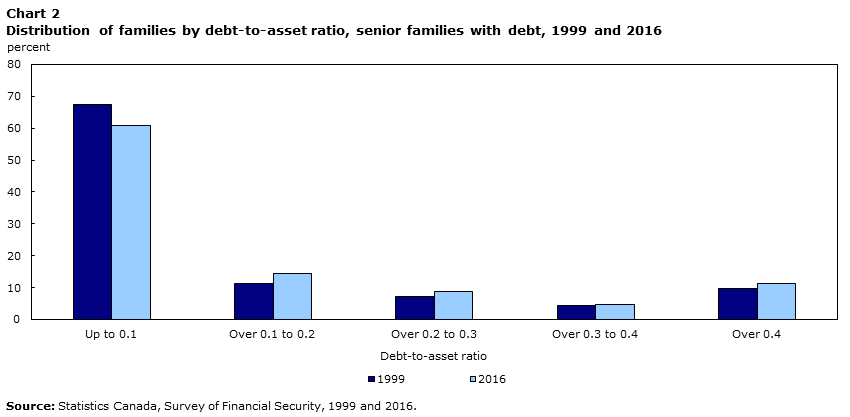
Data tabular array for Nautical chart 2
| Debt-to-asset ratio | 1999 | 2016 |
|---|---|---|
| pct | ||
| Upwardly to 0.1 | 67.4 | 60.9 |
| Over 0.one to 0.2 | 11.three | 14.4 |
| Over 0.2 to 0.iii | vii.3 | 8.7 |
| Over 0.iii to 0.4 | 4.three | 4.seven |
| Over 0.iv | nine.8 | xi.3 |
| Source: Statistics Canada, Survey of Fiscal Security, 1999 and 2016. | ||
Various characteristics were associated with a relatively high debt-to-asset ratio, every bit shown in Tabular array 6. Higher income levels were associated with a lower probability of having a debt-to-nugget ratio over 0.1. Specifically, the probability that a family in the highest income quintile would have a college debt-to-nugget ratio was 29%, compared with 58% for those in the bottom quintile. Other groups who were more probable to accept the ratio over 0.1 included unattached seniors, immigrants, working seniors, and seniors residing in Alberta. Note
Determination
Due to the crumbling of the population, a growing proportion of Canadians are at present aged 65 or over. A growing number of studies are devoted to this segment of the population. This paper looked at the distribution of debt and assets among senior families and the changes over time. Between 1999 and 2016, the proportion of seniors with debt increased from 27% to 42%. The median debt rose from $nine,000 to $25,000. At the aforementioned time, median assets went up from $327,000 to $607,400. Ii-thirds of the increase in debt was due to mortgage debt and effectually one-half of the increase in avails was related to real estate.
The magnitude of these changes in debt and assets varied across family characteristics. As a result, certain family types saw their net worth increment notably more than others. For instance, between 1999 and 2016, the median net worth for families in the top income quintile increased by $661,700. By contrast, the increase for senior families in the bottom income quintile was non statistically significant.
The debt-to-income and the debt-to-asset ratios provide another perspective on family unit finances. There was little change in the median debt-to-asset ratio over time. Withal, the median debt-to-income ratio increased from 0.24 in 1999 to 0.52 in 2016. The increase in the debt-to-income ratio, all the same, varied across groups, and the increase in debt levels did not have the same implications for all groups of seniors.
Seniors in younger age groups (aged 65 to 69), those in college income quintiles and those living in British Columbia saw significant increases not merely in their debt-to-income ratios, but likewise in their internet worth levels. For these seniors, a rise debt-to-income ratio likely reflects an increased capacity to borrow, for example through lines of credit financed confronting housing collateral.
For other groups of seniors, such as those with lower levels of didactics or unattached individuals, increases in the debt-to-income ratio could be more consequential as their net worth did non increase as much as the internet worth of other groups of seniors. Some of these seniors may be more at risk to have exceedingly high levels of debt relative to income, and therefore may exist more than financially vulnerable. For these seniors, a higher debt level could have consequences such as delayed retirement, lower levels of mental or physical well-existence, and elevated levels of stress. Financial difficulties can too translate into fewer options for seniors if they require care.
Sharanjit Uppal is a senior researcher with Statistics Canada's Insights on Canadian Social club.
Get-go of text box
Data source
Information from the 1999 and 2016 Survey of Financial Security (SFS) were used in this study. The SFS is a voluntary survey that collects information from a sample of Canadian families on their assets, debts, employment, income and instruction. Data is collected on the value of all major financial and not-financial assets and on the money owing on mortgages, vehicles, credit cards, educatee loans and other debts.
The SFS covers the population living in the 10 provinces. Excluded from the survey coverage are persons living on reserves and in other Aboriginal settlements in the provinces; official representatives of strange countries living in Canada and their families; members of religious and other communal colonies; members of the Canadian Forces living on military bases or in military camps; and persons living full time in institutions such every bit inmates of penal institutions and chronic care patients living in hospitals and nursing homes.
The analysis in this report is restricted to senior families who had debt. Individual characteristics such as age and education reverberate those of the major income earner of the family.
Definitions
Family unit refers to the economic family, divers as families consisting of two or more people living in the aforementioned dwelling, related past claret, union or adoption, or who are living common police force, and unmarried people who are living either alone or with others to whom they are unrelated.
Total debt pertains to total family debt and includes mortgage debt on the chief residence and all other real estate (Canadian and foreign), and consumer debt.
Mortgage debt refers to debt owed past families on the principal residence and all other existent estate (Canadian and foreign).
Consumer debt includes debt outstanding on credit cards, personal and home equity lines of credit, and secured and unsecured loans from banks and other institutions (including vehicle loans), and other unpaid bills.
Total assets pertain to full family avails and include real manor (master residence and all other existent estate), employer alimony plans (on a termination footing) and all other assets (including RRSPs, RESPs, RRIFs, stocks, bonds, mutual funds, vehicles, household possessions, bank accounts, collectibles, accumulated value of family businesses, and other financial and non-financial assets).
Income quintiles are based on the total before-tax economical family income adapted for family unit size (i.e., divided past the square root of the family size).
Debt-to-income ratio is obtained past dividing full family debt by the total after-tax family income.
Debt-to-asset ratio is obtained past dividing total family debt by total family assets.
End of text box
Start of text box
Income among senior families increased over time. In 2016, the before-revenue enhancement family income was $43,300, upwardly from $36,200 (2016 dollars) in 1999 (Table 8). Notation Though income increased for almost all groups, there were variations. For example, families in the elevation income quintile saw their income rise by $29,700 (+36%) whereas those in the bottom quintile had an increase of $1,500 (+viii%). This difference led to a widening of the gap betwixt these 2 quintiles from $64,400 in 1999 to $92,600 in 2016. Amid educational groups, families whose major income earner had a high school diploma or less had no alter in income, whereas the income of the 2 groups with higher levels of education increased.
| Before tax | Later on revenue enhancement | |||
|---|---|---|---|---|
| 1999 | 2016 | 1999 | 2016 | |
| 2016 constant dollars | ||||
| All senior families with and without debt | 36,200 | 43,300 Note* | 33,500 | 40,300 Note* |
| Sex of major income earner | ||||
| Male | 45,300 | 55,100 Note* | 41,200 | 49,900 Note* |
| Female person | 24,900 | 35,100 Notation* | 23,200 | 33,200 Note* |
| Age of major income earner | ||||
| 65 to 69 | 42,500 | 54,700 Note* | 37,700 | 47,600 Note* |
| 70 to 74 | 39,400 | 46,100 | 35,900 | 41,900 Note* |
| 75 to 79 | 34,000 | 43,300 Annotation* | 32,400 | twoscore,000 Note* |
| lxxx and over | 28,400 | 35,600 Note* | 26,700 | 34,000 Note* |
| Highest level of education of major income earner | ||||
| Less than high school | 31,600 | 31,600 | 30,400 | 30,700 |
| High school diploma | 39,500 | 42,200 | 36,700 | 39,600 |
| Non-university postsecondary certificate or diploma | 38,700 | 51,100 Note* | 35,900 | 45,600 Note* |
| University degree or certificate | 61,800 | 74,700 Notation* | 51,100 | 63,700 Notation* |
| Family unit structure Table viii Annotation1 | ||||
| Unattached individual | 22,700 | 28,000 Annotation* | 21,600 | 26,800 Note* |
| Male person | 26,300 | 29,200 | 23,800 | 27,800 |
| Female | 22,100 | 27,400 Notation* | 21,100 | 26,400 Notation* |
| Couple, no children | 47,100 | 62,000 Note* | 42,700 | 56,800 Note* |
| Other family types | 52,900 | 68,200 Note* | 49,300 | 62,400 Note* |
| Immigrant condition of major income earner | ||||
| Immigrant | 37,900 | 42,200 | 35,600 | 40,600 |
| Canadian-built-in | 35,700 | 43,700 Note* | 33,300 | 40,300 Notation* |
| Home ownership status | ||||
| Owners with a mortgage | 52,100 | 58,900 | 45,500 | 52,700 |
| Owners without a mortgage | 41,800 | 55,300 Note* | 38,000 | 49,800 Note* |
| Non-owners | 24,500 | 28,900 Notation* | 22,800 | 28,300 Note* |
| Labour force status of major income earner | ||||
| Employee | 68,600 | 79,900 | 59,300 | 68,300 |
| Cocky-employed | 63,700 | 69,200 | 50,900 | 63,100 |
| Non in the labour force | 34,900 | twoscore,200 Annotation* | 32,600 | 37,500 Note* |
| Family income quintile | ||||
| Bottom quintile | 17,700 | 19,200 Note* | 17,700 | 19,200 Note* |
| 2d quintile | 23,800 | 29,900 Note* | 22,700 | 29,300 Annotation* |
| Middle quintile | 36,700 | 43,000 Note* | 35,600 | 41,900 Notation* |
| Fourth quintile | 50,700 | 66,200 Note* | 45,500 | 59,400 Note* |
| Top quintile | 82,100 | 111,800 Note* | 65,600 | 93,300 Note* |
| Province or region of residence | ||||
| Atlantic | 30,900 | 41,300 Annotation* | 29,800 | 39,400 Annotation* |
| Quebec | 33,300 | 36,700 | 32,100 | 34,800 |
| Ontario | 41,600 | 45,900 | 38,000 | 43,300 Note* |
| Manitoba | 33,700 | 48,700 Note* | 31,500 | 43,900 Note* |
| Saskatchewan | 33,500 | 43,000 Note* | 32,100 | 39,700 Notation* |
| Alberta | 35,100 | 55,200 Note* | 33,900 | 49,000 Note* |
| British Columbia | 36,400 | 48,200 Annotation* | 32,800 | 43,200 Note* |
| ||||
At the regional/provincial level, the before-taxation family unit income of senior families in 2016 varied from a low of around $36,700 in Quebec to a loftier of most $55,200 in Alberta. Between 1999 and 2016, families in all provinces or regions, except Quebec and Ontario, saw their incomes grow. The increase was the largest in Alberta (as it increased past $twenty,100 or 57%).
The employment charge per unit among seniors has been on the ascent since the mid-1990s. In 2015, 20% of Canadians anile 65 and over were employed, up from 10% in 1995. Notation As a result, wages and salaries were the major source of family unit income for ane in 10 seniors in 2016 (Chart 3). Regime transfers are still the major source of income for a bulk of seniors, though the proportion reporting them as a major source dropped from 68% in 1999 to 52% in 2016. A growing proportion of seniors reported retirement pensions as their major source of income (32% in 2016 versus 21% in 1999).

Data tabular array for Chart 3
| Major source of income | 1999 | 2016 |
|---|---|---|
| percent | ||
| Wages and salaries | three.7 | 9.half dozen |
| Self-employment income | one.iv NoteE: Use with caution | 2.2 |
| Regime transfers | 68.1 | 51.half dozen |
| Investment income | v.seven | 4.1 |
| Retirement pensions | twenty.6 | 31.seven |
| Other income | 0.5 NoteEast: Use with caution | 0.vi NotationE: Use with caution |
| Eastward utilize with caution Source: Statistics Canada, Survey of Financial Security, 1999 and 2016. | ||
Terminate of text box
Study a problem on this folio
Is something not working? Is there information outdated? Can't notice what you're looking for?
Please contact the states and let us know how we tin can assist yous.
Privacy detect
- Date modified:
Source: https://www150.statcan.gc.ca/n1/pub/75-006-x/2019001/article/00005-eng.htm
0 Response to "A Family Could Have a Positive Savings Ratio at the Same Time Its Debt Service Ratio Is Increasing"
Post a Comment